Content syndication is publishing a piece of your content, usually a report, guide, or webinar, through a third party so it reaches people outside your own audience. In B2B it is a lead generation channel: the people who request the asset come back to you with their contact details, and sometimes with answers to your questions. The download is the mechanism. The lead is the product. Most vendor lists are written as if those were the same thing.
What content syndication means in B2B
The term comes from publishing, where a column runs in many newspapers at once. B2B marketing borrowed it for a specific trade: you supply the asset, a vendor supplies the audience, and the people who engage are returned to you as named contacts.
That makes it different from three things it is often confused with. It is not guest posting, where the goal is a backlink. It is not product content syndication, where retailers receive your product data for their listings. And it is not a content distribution tool that reposts your blog to social networks. Those share a word and nothing else.
A syndication lead usually carries a name, a title, a company, a work email, and the asset they requested. A good one also carries answers to two or three questions you wrote, which is what turns a download into something sales can use.
Two ways to buy it
Search for a content syndication platform and you get lists of vendors. The lists mix two different things.
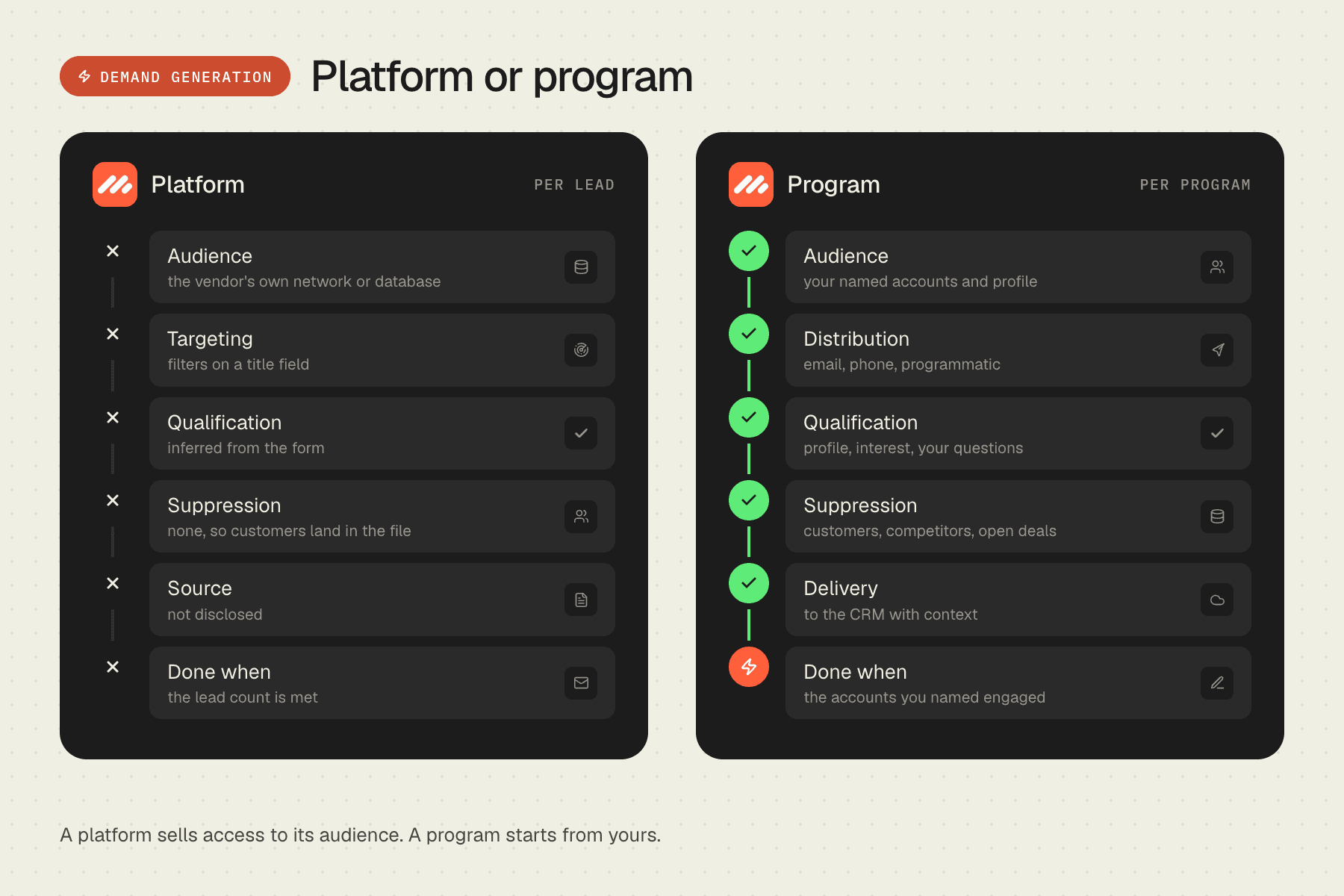
A platform sells access. It has an audience of its own, a publisher network, or a database it emails, and it charges you per lead for the people who respond to your asset. You pick the targeting filters, upload the asset, set a lead goal, and wait for the file. The vendor's job ends when the lead count is met.
A service sells a program. It starts from your target accounts and buyer profile, not from the audience it happens to own. It promotes the asset through more than one channel, typically email, phone, and programmatic media, to the accounts on the list. It qualifies the responses against your definition before delivery. The vendor's job ends when the accounts you named have engaged and the ones that engaged are ready for sales.
Both deliver leads. Only the second starts from who you want to reach. Which one you need follows from what sales will do with the file. If sales will run a nurture and wait, a platform at low cost per lead can be enough. If sales is expected to call the lead this week, the lead has to prove something first.
What a syndication lead has to prove
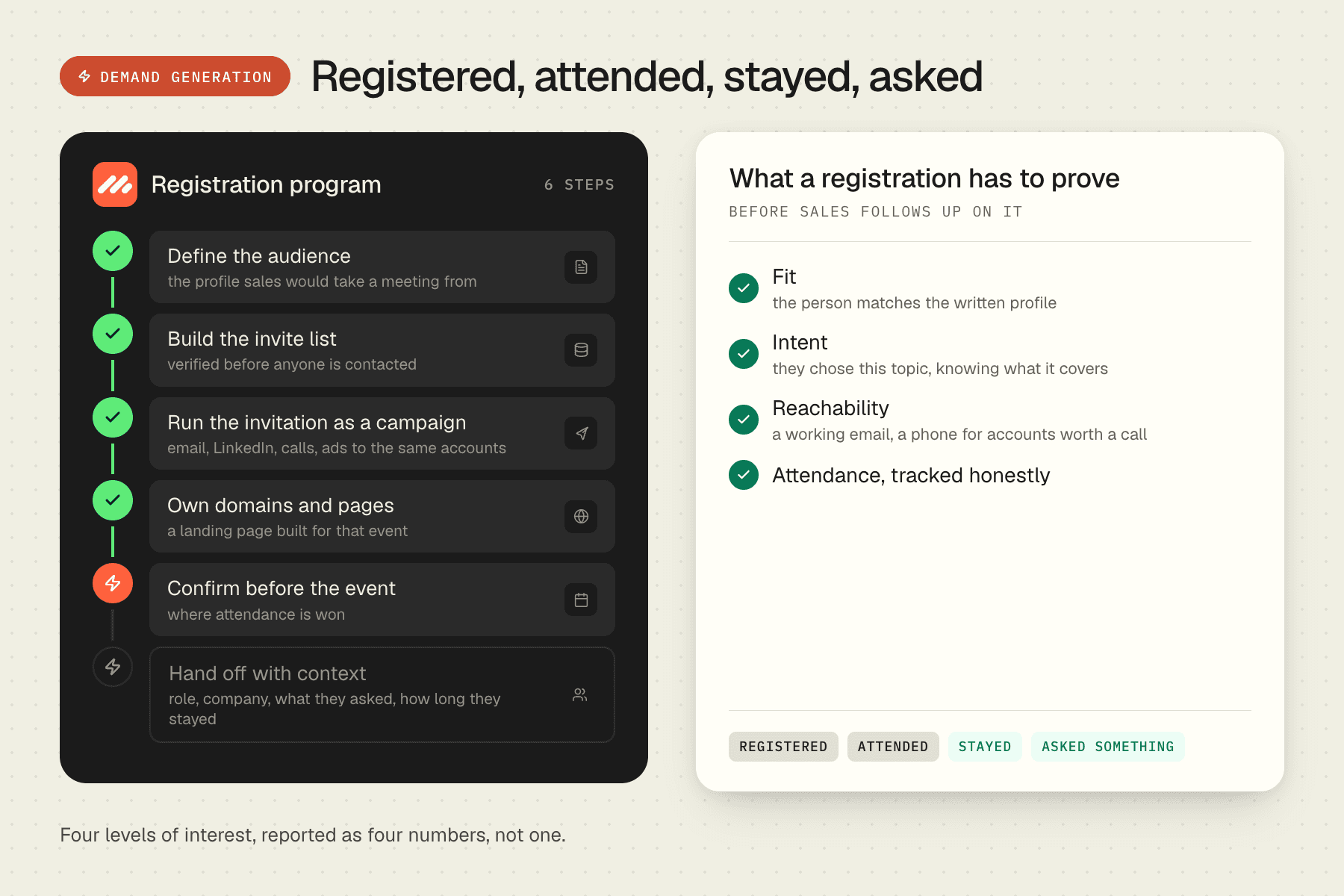
Four things, in order.
- The person matches the profile you wrote. Title, seniority, company size, industry, and region, all checked, not inferred from a form field.
- The person actually requested your asset. Not a bundled download, not a co-registration checkbox, not a newsletter opt-in repurposed as a lead.
- Your questions were answered. If you asked about a current initiative or a tool in use, the answer is on the record and it is the person's own.
- The source is disclosed. Which publisher, which email, which call. A vendor that will not say where a lead came from is telling you something.
A file that passes all four is a list of people who chose to read your material and told you something about their situation. A file that passes none is a list of people who once downloaded something, somewhere.
How a program runs
- Define the audience. Named accounts if you have them, otherwise a written profile a sales rep would accept a meeting from. This is the same list an outbound or ABM program would use, and it should be the same list.
- Choose the asset. Something a buyer in the middle of a decision would want: a comparison, a benchmark, a how-to. Top-of-funnel awareness content pulls students and job seekers.
- Distribute on more than one channel. Email reaches the people who read email. Calling reaches the people who do not. Programmatic display keeps the asset in front of the account between touches. One channel alone fills the file with one kind of respondent.
- Qualify the response. Profile checked, interest confirmed, your fields answered. Anything that fails is replaced, not delivered.
- Deliver with context, then hand off. The lead arrives in the CRM with the asset, the answers, and the source. Sales knows why it is there before the first call.
Where programs break
Price per lead is the usual cause. A vendor paid per name is paid to deliver names, so the file fills with whoever converts cheapest. The fixes are structural: a profile that is checked rather than filtered, a suppression list of existing customers and competitors, a cap on leads per company, and a replacement policy for leads that fail the check.
The second cause is the asset. A generic ebook pulls generic readers. The leads are real people who really downloaded it and still none of them is buying anything.
The third is the handoff. Syndication leads are not inbound demo requests. If sales treats them that way the first call goes badly and the channel gets blamed. The lead needs a nurture step or a reason-to-call that comes from the answers in the file.
How to judge a vendor before you buy
Ask these on the first call.
- Where does the audience come from, and can you name the sources on each lead?
- Do you check the profile against our definition, or filter a database by title?
- What happens to a lead that fails the check?
- Can we add our own qualifying questions, and will the answers be the respondent's own?
- Do you suppress our customers, our competitors, and our open opportunities?
- Is the price per lead or per program, and what is the measure of success?
The answers separate a platform from a service faster than any list of logos.
Content syndication as a program, not a platform
Martechs runs content syndication as a service. Your reports and guides reach named target accounts by email, phone, and programmatic media. The accounts that respond are qualified before sales steps in: profile captured, interest confirmed, your questions answered. It is priced per program. The Content Syndication page explains how the program runs and who it fits.