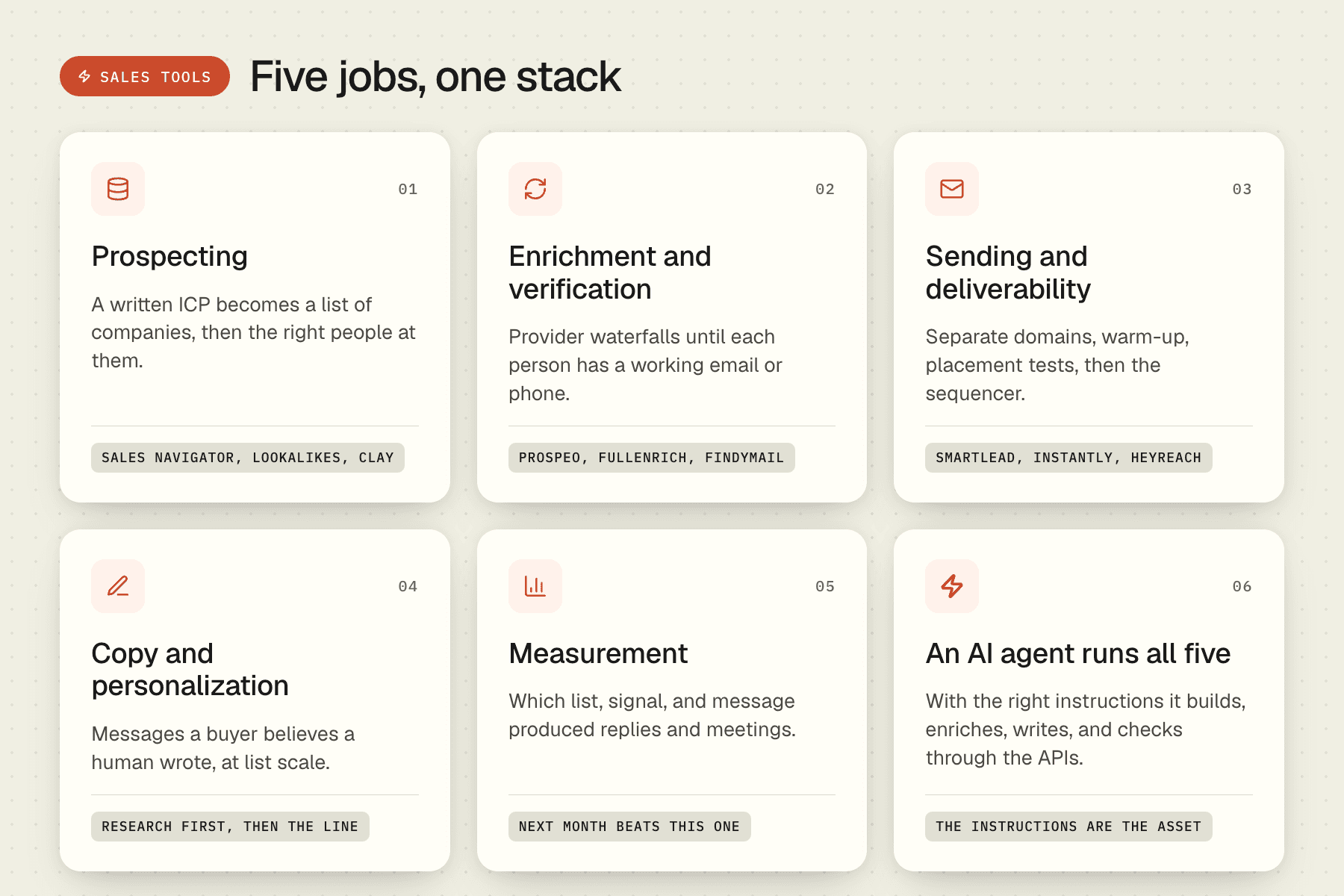
A B2B sales tool stack covers five jobs: finding companies and contacts, verifying emails and phone numbers, sending at scale without landing in spam, writing and personalizing copy, and tracking replies through to a qualified meeting. Most teams buy one tool per job and wire them together. A few buy a single platform that covers all five at lower depth on each.
The five jobs a sales tool stack has to do
Every outbound motion does the same five things, whatever logos are on the invoices.
- Prospecting. Turn a written ideal customer profile into a list of companies, then the right people at them.
- Enrichment and verification. Get a working email or phone number for each person. Discard the rest before anyone sends to it.
- Sending and deliverability. Deliver at volume without landing in spam, and know when you are about to.
- Copy and personalization. Write messages a buyer believes a human wrote, at list scale.
- Measurement. Know which list, which signal, and which message produced replies and meetings, so the next month is better than this one.
Buy for the jobs, not the brands. The brands change yearly. The jobs have not changed in a decade.
Prospecting and list-building tools
The starting point is a source of companies and people. LinkedIn Sales Navigator is still the broadest people source, and most teams keep a seat whatever else they buy. Company databases and lookalike engines expand from a handful of good customers to a full market. Workspaces like Clay sit on top and pull from many sources into one table.
The teams that win here do not buy a bigger database. They add sources the databases miss: job postings, public registries, technology install data, social activity. A list built from a signal (who is hiring an SDR leader this month) beats a list built from a filter (every SaaS company with 50 to 200 employees) on every reply metric that matters.
Enrichment tools
No single provider has everyone. Coverage differs by region, seniority, and company size, so the standard pattern is a waterfall: try one provider, fall through to the next, stop at the first verified hit. Prospeo, FullEnrich, Findymail, and LeadMagic are common steps in those waterfalls, and the order matters less than the discipline of verifying every email before it enters a campaign.
The unglamorous half of enrichment is cleaning: company names that read like legal filings, first names in capitals, duplicates across sources. Skipping it shows up later as bounced sends and messages that open with a mangled name.
Sending and deliverability tools
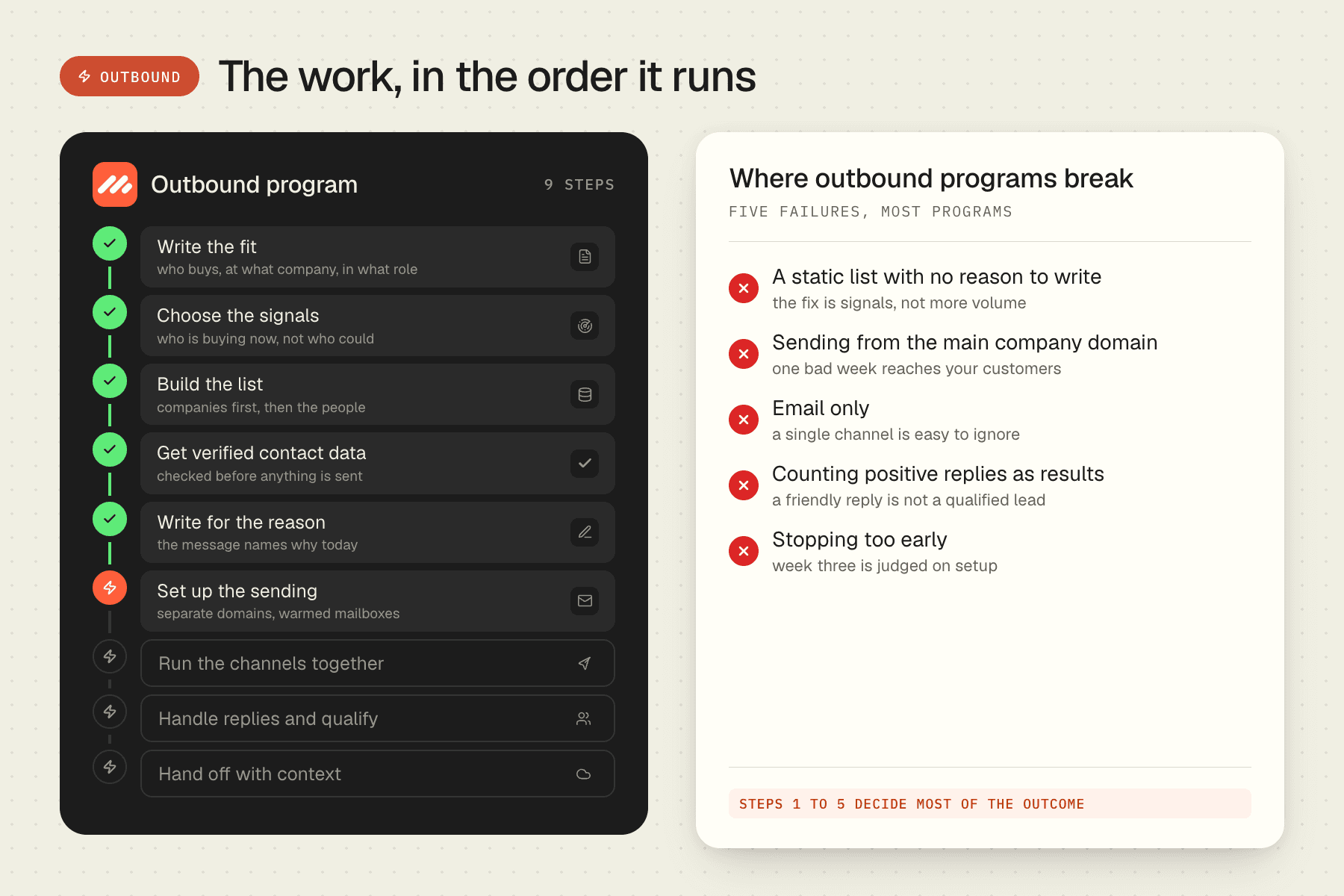
Sequencers like Smartlead and Instantly handle email. HeyReach does the same job for LinkedIn. The sequencer is the visible part; the invisible part decides whether anything lands. That means separate sending domains so a spam incident never touches the domain customers write to, mailbox warm-up before volume, and placement testing that tells you which inbox tab you are landing in before a campaign spends its list.
Deliverability is the job most first-time builders skip and the one that kills the program when skipped. A great list and great copy sent from a cold domain is invisible.
Running the stack through an AI agent
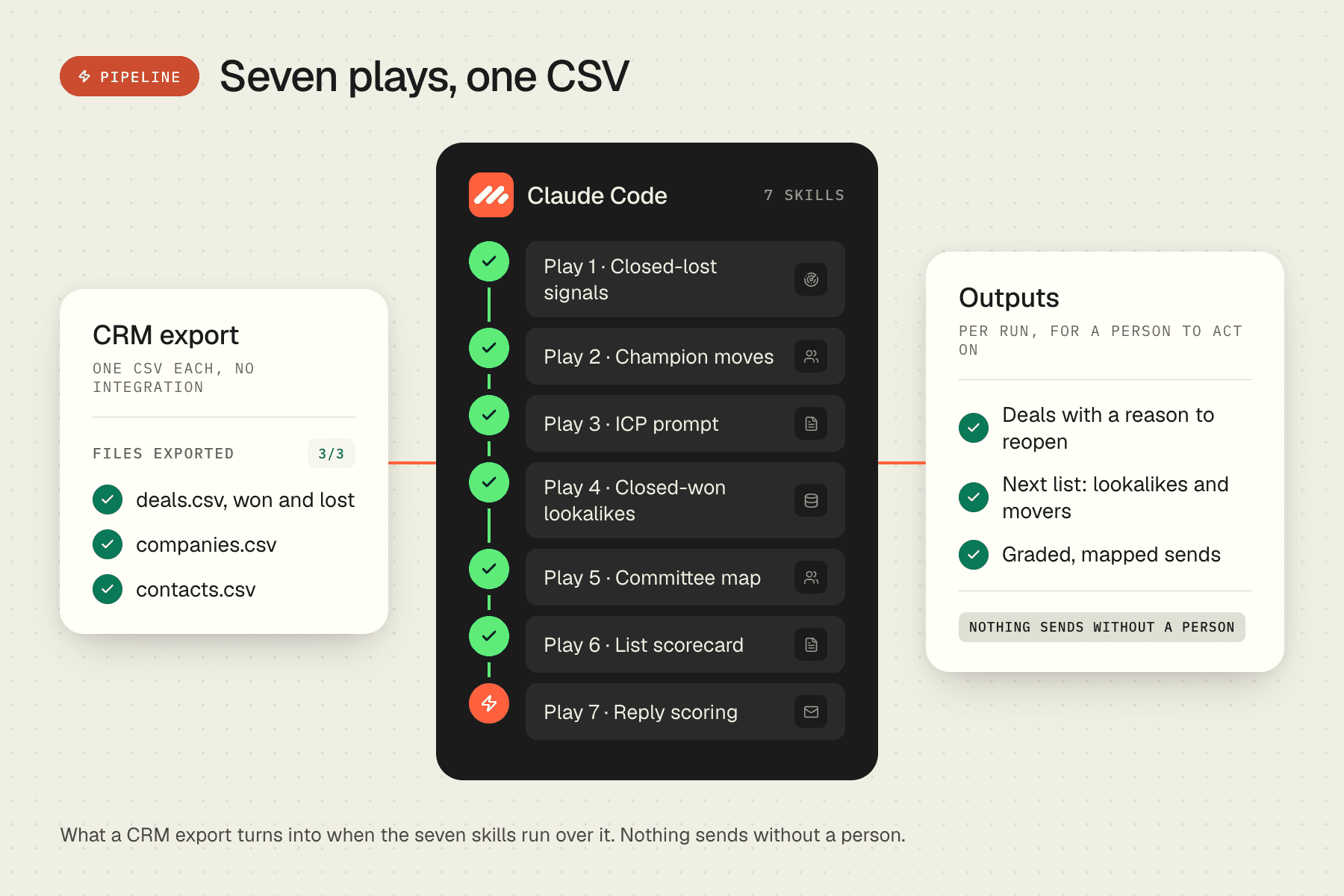
The newest change to the stack is not another tool. It is that an AI agent with the right instructions now operates the tools directly: builds the list, runs the enrichment waterfall, writes the copy, and checks the output through the tool APIs. The instructions are the asset. The GTM skills library on this site is that asset written down: fifty-nine skills covering the five jobs, twelve for list building, twenty-two for turning signals into plays, six for copy and outreach, five for sending infrastructure, six for iteration and measurement, and eight for strategy and ABM spanning the rest.
Buy point tools or one platform
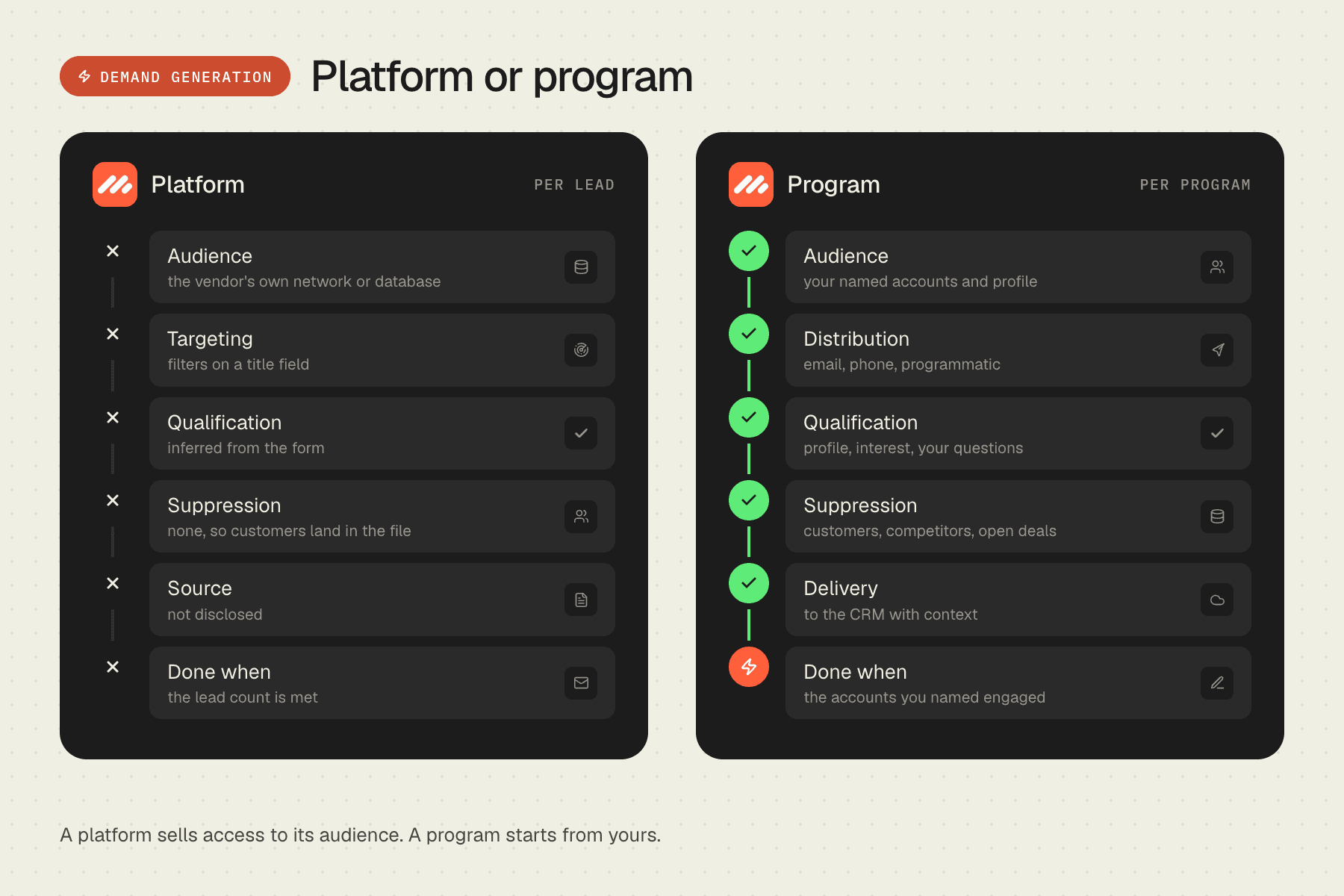
All-in-one platforms bundle the five jobs into one subscription. The trade is depth for convenience: one login and one bill, against a database thinner than a waterfall, a sequencer with fewer deliverability controls, and lock-in when one piece stops being good enough.
The point-stack trade runs the other way. Best tool for each job, swap any piece without touching the rest, but someone has to wire them together and keep the wiring alive. That someone is a GTM engineer, in-house or rented.
A reasonable default: platforms for a first motion proving demand exists, a point stack the moment replies start paying for the attention it costs.
What Martechs runs instead of assembling a stack
Our programs do not run on a shelf of point tools. The motion runs through AI agents (Claude Code and Codex) executing the skills in our library, with Deepline for enrichment waterfalls and data work, GetLeads for signals and visitor identification, and Supabase, Railway, and Trigger.dev as the infrastructure underneath. Clients who already run Clay keep it; the skills drive it rather than replace it.
That is the model behind our outbound service: the stack is already built, already warmed, and already measured, and the GTM skills library is the visible part of how the team works.