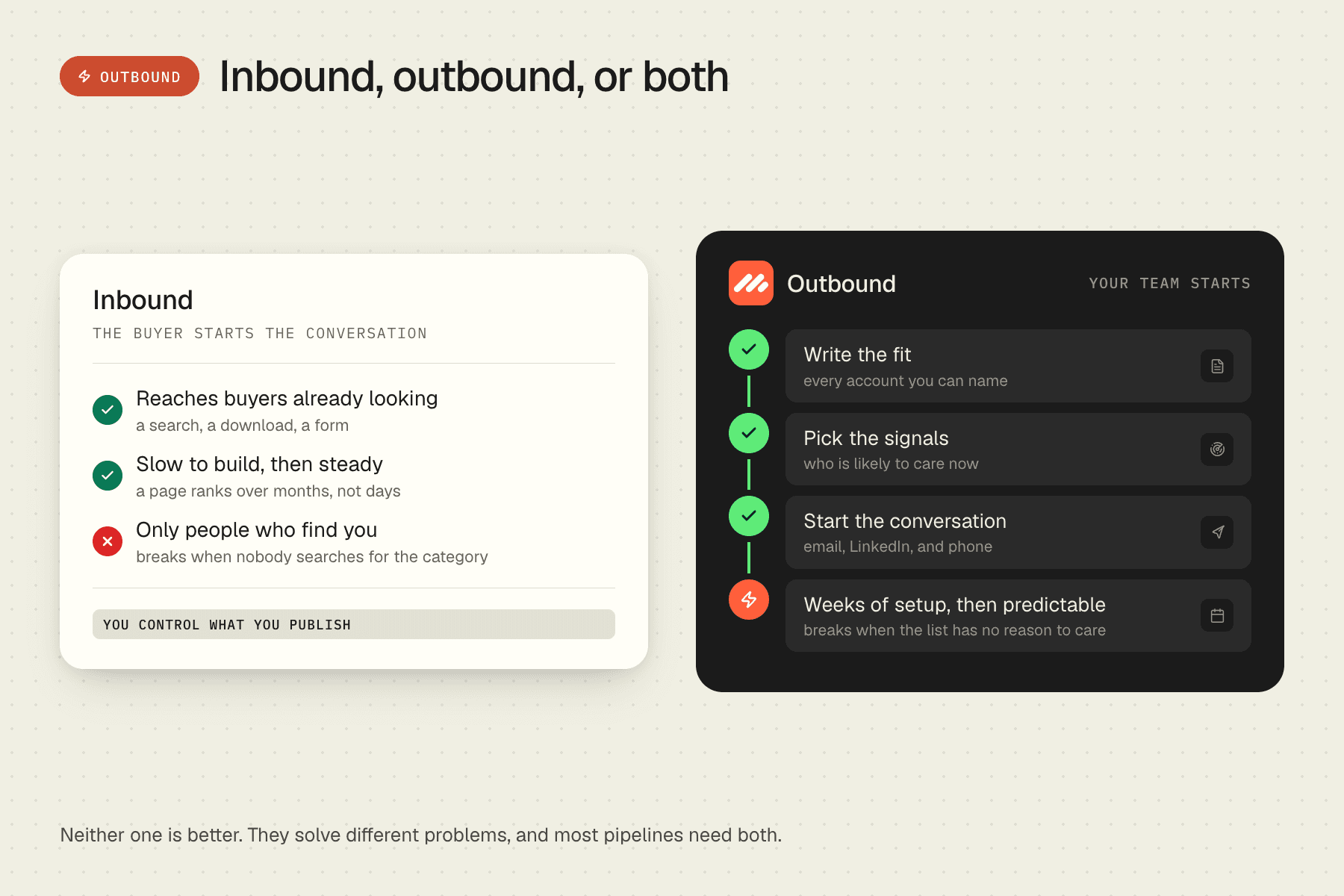
Inbound sales works leads who came to you: they searched, downloaded, or filled in a form, and your team replies. Outbound sales goes the other way. Your team picks the buyer and starts the conversation before the buyer has asked. Inbound reaches buyers who are already looking, and is capped by how many people look for you. Outbound takes weeks to set up and reaches the whole market you can name.
Inbound vs outbound sales: the short answer
| Inbound | Outbound | |
|---|---|---|
| Who starts the conversation | The buyer | Your team |
| Buyer's state when you first talk | Already looking | Not looking yet, or not looking at you |
| What you control | What you publish and where | Who you contact and when |
| Reach | Only people who find you | Every account you can name |
| Time to first results | Slow to build, then steady | Weeks of setup, then predictable |
| Cost shape | Content and search, front-loaded | People, data, and sending, ongoing |
| Breaks when | Nobody searches for your category | The list has no reason to care today |
Neither one is better. They solve different problems, and most pipelines need both.
What inbound sales is
Inbound starts with something a buyer finds: a search result, a guide, a comparison page, a webinar. The buyer raises a hand, and sales follows up on the interest that is already there.
Its strength is intent. Someone who searched for your category is closer to a decision than someone you interrupted. Its limit is volume. You only get the people who look, and in a new or narrow category that can be a small number.
Inbound also takes time. A page ranks over months, not days. Teams that need meetings this quarter cannot wait for it.
What outbound sales is
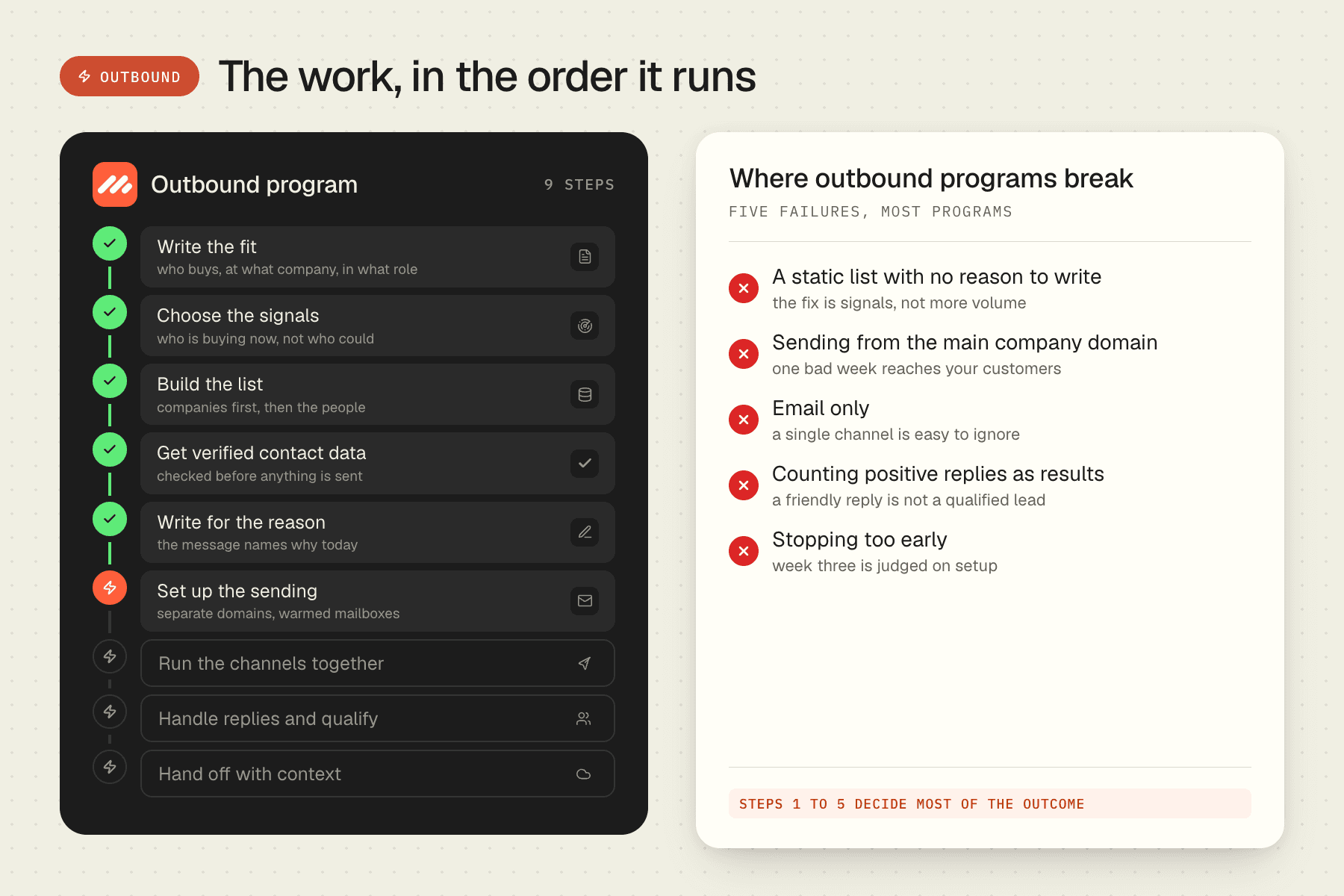
Outbound starts with a list. You define who buys, find the right people at those companies, and reach them by email, LinkedIn, and phone. Replies are qualified, and the real ones become meetings.
Its strength is control. You choose the accounts, so you can go after the ones you want, not the ones that happen to find you. Its limit is relevance. A message sent for no reason gets no reply, and a list with no reason to buy today wastes the effort.
That is why timing matters more than volume. Signals such as funding, hiring in a relevant team, a new leader, or a changed tech stack say which accounts are likely to care now. The full process is in outbound lead generation: how it works, and where it breaks.
How to choose
Four questions decide most of it.
- Can you name your buyers? If you can write the target list, outbound can reach it. If the market is too vague to list, inbound has to do the finding.
- Is the deal large enough to justify a person's time? Outbound spends rep time per account. A small deal rarely pays for that. A large one usually does.
- Do buyers search for what you sell? If they do, inbound has demand to catch. If your category is new, nobody is searching and outbound has to create the conversation.
- How soon do you need pipeline? Outbound can start producing within weeks of setup. Inbound compounds over months.
If you answer "yes, yes, no, soon", lead with outbound. If you answer "no, no, yes, later", lead with inbound. Most teams land in the middle.
Why most teams run both
The two are not rivals. They feed each other.
- Inbound gives outbound its signals. Someone who downloads a guide or visits a pricing page is telling you something. That account belongs at the top of the outbound list.
- Outbound gives inbound its audience. A cold message that offers a useful guide, not a demo, earns a reply from buyers who would never have booked a call. A lead magnet is the bridge.
- Both depend on the same fit. If the ideal customer is written down once, both programs aim at the same people.
Content syndication sits in the gap. You publish a report or guide, and it is pushed to named accounts by email, phone, and programmatic media, so content does the outbound work. The Content Syndication page covers how that runs as a program.
Where each one breaks
Inbound fails in three ways.
- Publishing for traffic, not buyers. Pages that rank for broad terms bring visitors who never buy.
- No path from the page to a conversation. A guide with no next step is a dead end.
- Slow feedback. It takes months to learn that a topic does not work.
Outbound fails in five.
- A static list with no reason to write.
- Sending from the main company domain, so one bad week of spam complaints reaches customers.
- One channel only, which is easy to ignore.
- Counting positive replies as results. A friendly reply is not a qualified lead. The MQL, SQL, HQL, and BANT breakdown sets out the levels.
- Judging the program at week three, when most of the work was setup.
What to measure
Count each motion on its own terms, and then on the same final number.
| Stage | Inbound | Outbound |
|---|---|---|
| Reach | Impressions and visits from the right queries | Contacts reached, bounce rate |
| Interest | Form fills and downloads | Reply rate, then positive reply rate |
| Qualification | Leads your sales team accepts | Meetings your sales team accepts |
| Outcome | Cost per closed deal | Cost per closed deal |
The last row is the same on purpose. Cost per lead and cost per meeting flatter whichever motion is easier to count. Cost per closed deal is the only fair comparison.
Build it, or have it built
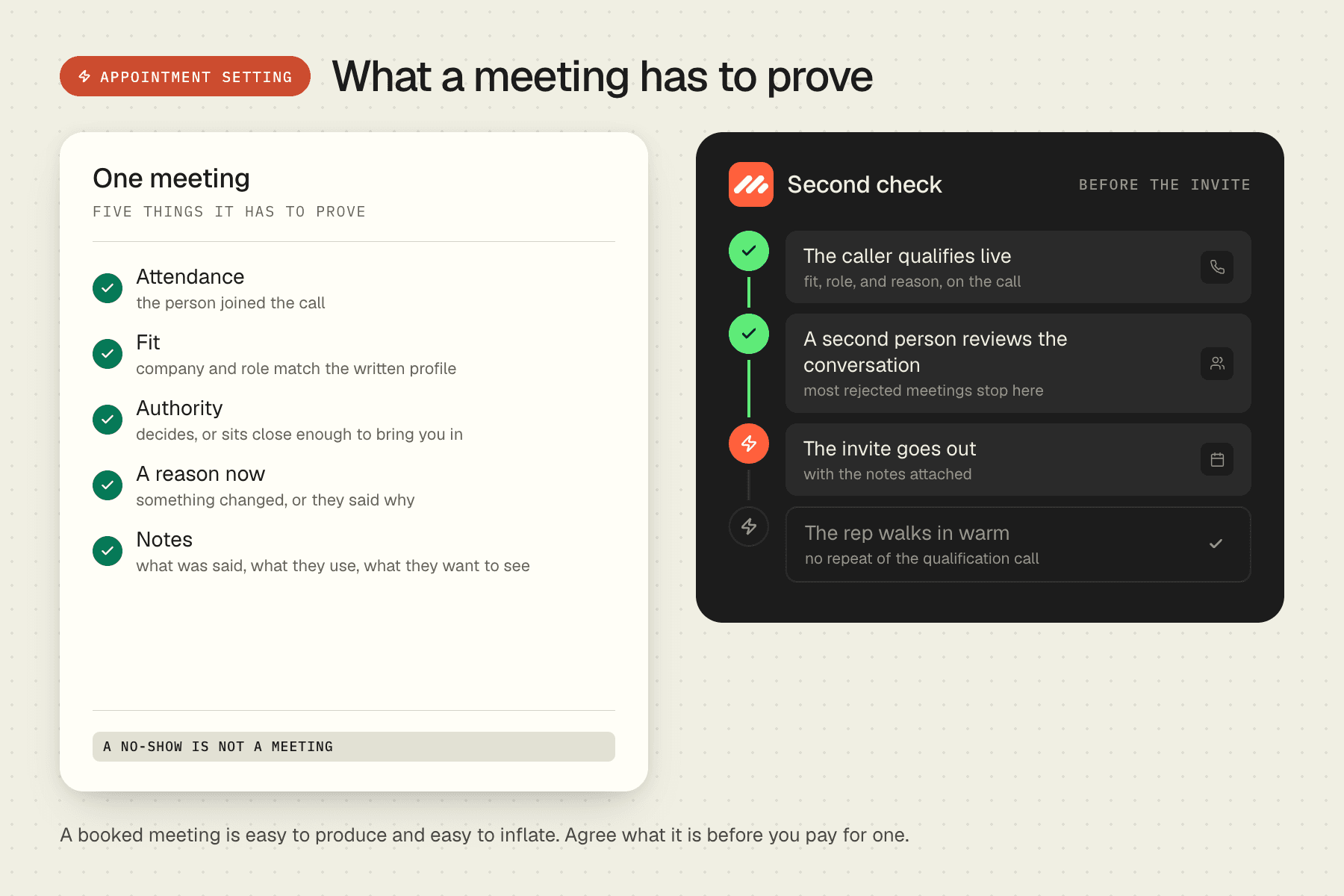
Outbound is the harder one to build in-house. It needs someone to write, someone to run the sending, someone to call, and the data tools to feed them. The costs most teams undercount are in B2B appointment setting: what an agency does, and how to judge a meeting.
Where this fits
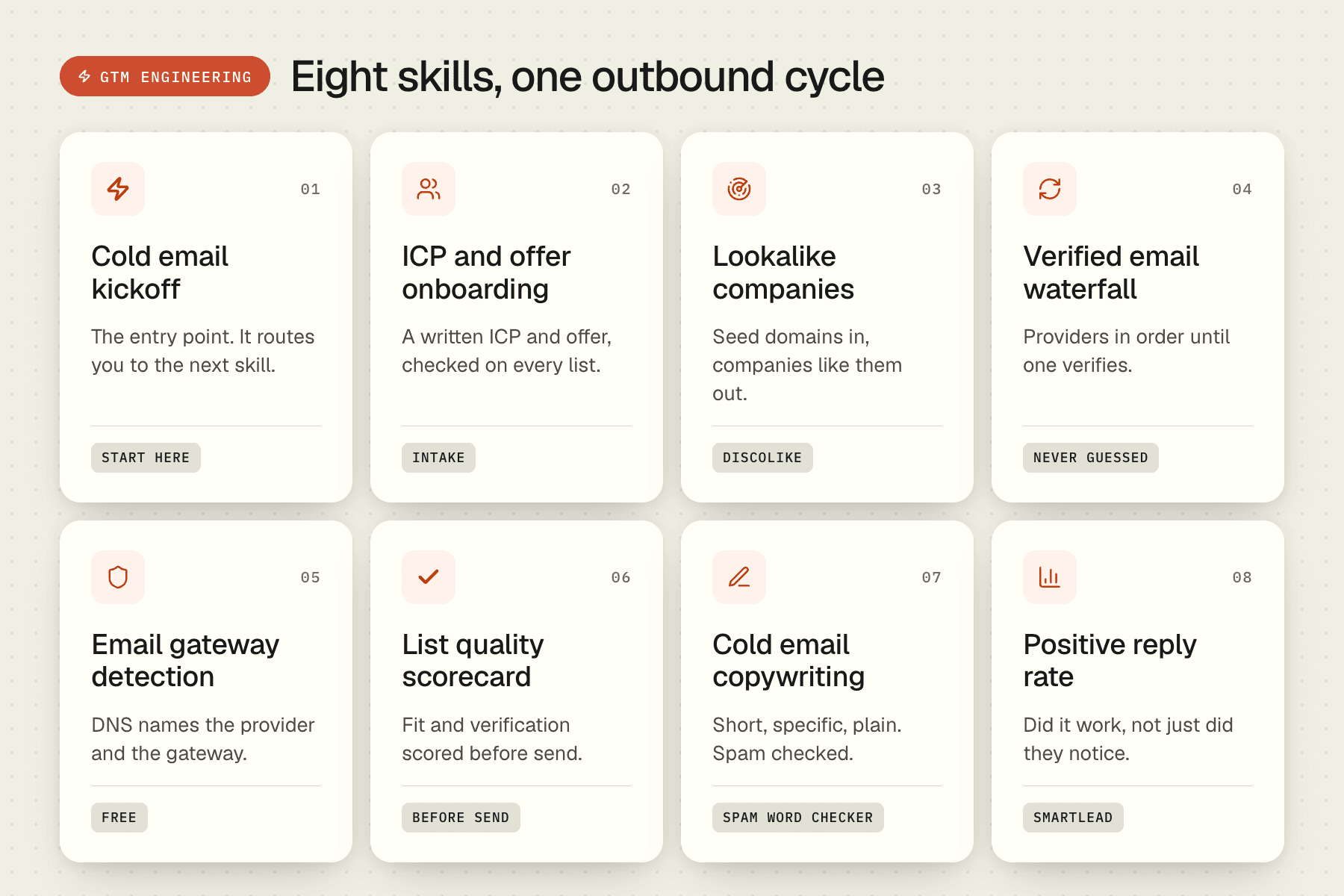
Martechs runs the outbound half as a service. Signal-Based Outbound picks accounts from live buying signals and runs email, LinkedIn, and calling as one campaign, with every meeting qualified live and checked by a second person before it reaches your calendar. The GTM skills linked below are the workflows behind it, free to read and install in Claude Code, Codex, or Cursor.